Skip to content
FairhavenGarage Door ServicesOpen 24/7 (289) 804-2651
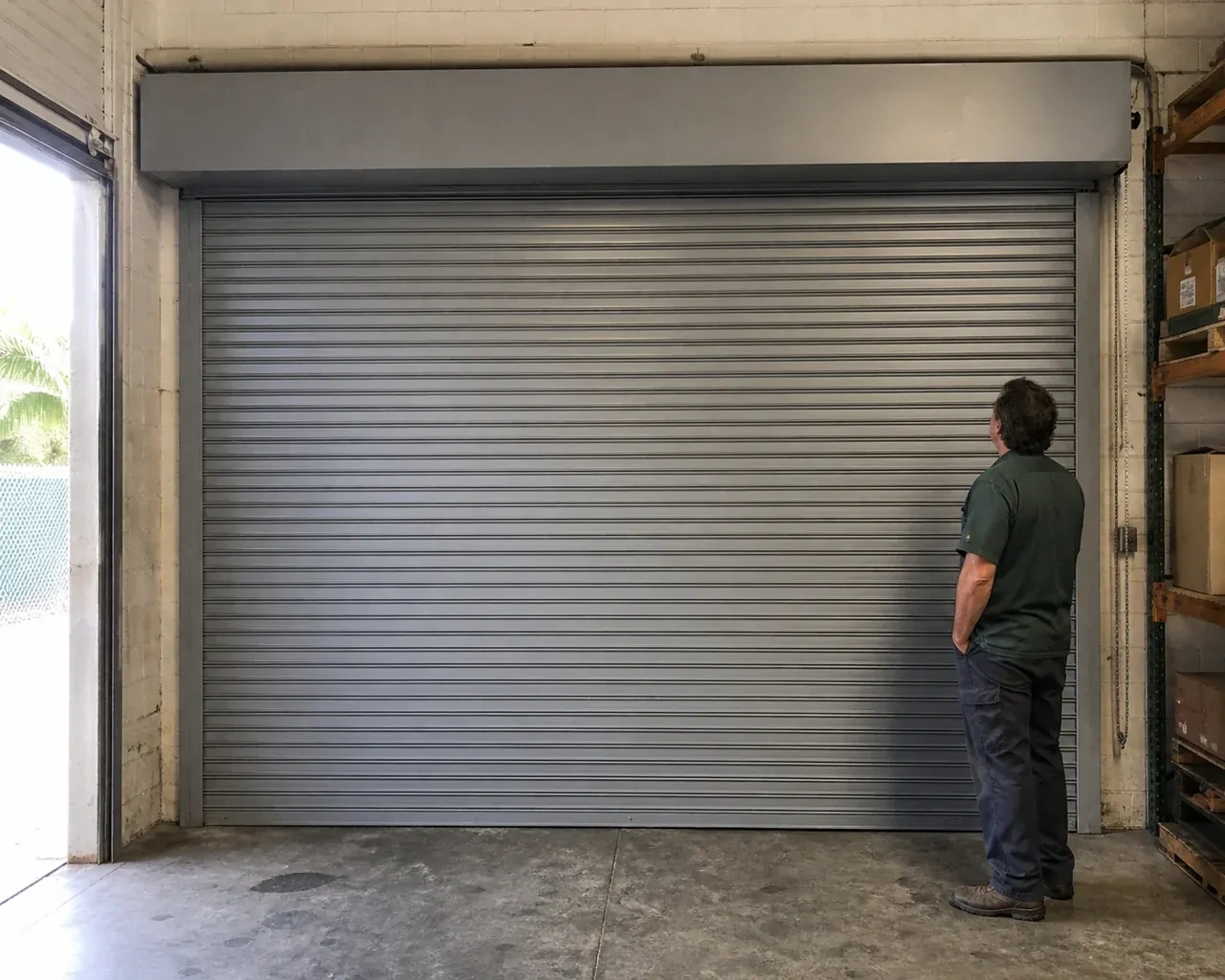
A person examines a closed metal rolling door with narrow horizontal slats, side guides and an overhead hood in a warehouse. — Commercial Rolling Door Repair, Westmount

New Doors · Westmount

Commercial Rolling Door Repair

Cold-weather moisture has frozen the bottom seal to the sill, and salty grit has collected along the guide entrances. The door chatters during its first cycle and leaves a visible gap after it reaches the closed limit.

In plain words

A rolling door that has become unusually heavy or starts to drift is asking for a counterbalance assessment. The barrel assembly commonly contains springs that offset curtain weight, and those parts hold substantial tension even while the door is stationary. The technician secures the curtain, examines brackets, bearings and drive components, then evaluates balance under controlled conditions. Adjustment uses purpose-made winding tools and the identified door instructions. Once the mechanical setting is correct, manual effort is checked across the full travel and any powered operator is tested without asking it to compensate for a poorly balanced door.

Sound familiar?Westmount

The call
The wall control asks the door to close, but the operator hums and stops. The curtain remains overhead while the control light and the photoelectric sensors suggest that the powered system needs a connected diagnosis.
NextHow the visit goes

Commercial Rolling Door Repair · Westmount

How the visit goes

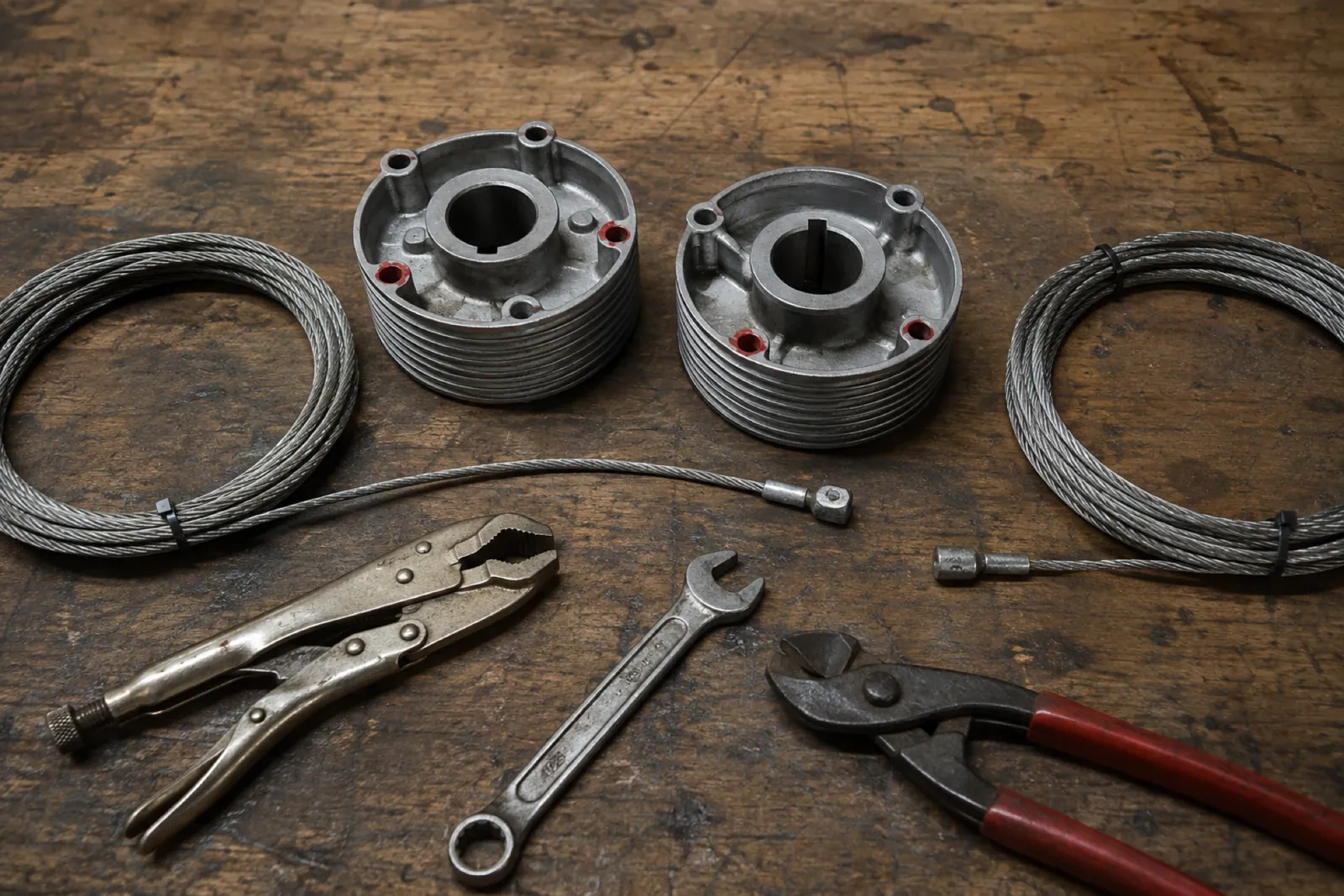
Pair of cast metal cable drums, two coiled steel cables, locking pliers, a combination wrench and red-handled cutters on a wooden bench. — Westmount
  1. Scene 1

    Start with the operating story

    The first clues come from the people who use the opening. The technician asks whether the change appeared after an impact, power interruption, cold night or gradual increase in noise; where the curtain stops; which control was used; and how many cycles the door normally sees. Staff can also point out a lock that sticks, a manual chain that has become heavy or a sensor that needs repeated cleaning. That history narrows the inspection before any cycling begins and distinguishes a one-time obstruction from wear that has been developing across the whole assembly.

  2. Scene 2

    Restore the bottom bar and closure line

    The bottom of the door determines how it meets the floor, carries locks and engages a sensing edge when fitted. A twisted bar is straightened or renewed within the agreed scope, damaged retainers and astragal are replaced, and slide bolts or cylinder-lock parts are aligned only after the curtain hangs square. For a powered assembly, lock interlocks are checked so an engaged lock and an operator command cannot work against each other. The close limit is then set to bring the seal into suitable contact without crushing it, leaving the doorway even and ready for a clear locking test.

  3. Scene 3

    Predictable travel through the opening

    After repair, staff have a door that follows a repeatable path from sill to hood. The bottom bar rises level, slats enter both guides without a recurring scrape, and the curtain forms an orderly coil rather than wandering toward one bracket. Open and closed limits match the usable doorway, and the normal control produces the expected start, stop and direction. The technician demonstrates a complete cycle and points out the ordinary sounds of the assembly so a future change is easier to recognise. This clear operating baseline is often the most useful outcome for a busy facility.

In the van

  • Operator brake and limits
  • Curtain slats and endlocks
  • Counterbalance spring assembly
  • Bearings and tension wheel
  • Guides and bellmouths

What shapes the quoteFairhaven Garage Door Services

Controls and interlocks
Three-button stations, key controls, lock interlocks, pass-door interlocks and access-system inputs create different diagnostic paths. The quote identifies which door-side controls are included in testing.
Guide and jamb condition
The quote reflects guide straightening or replacement, wall-angle fasteners and measured alignment. Moved masonry, steel framing or a struck jamb can add separately responsible building work.
Cause of the failure
Impact, gradual wear, corrosion, freezing, building movement and a control fault can produce similar symptoms. The verified cause determines whether cleaning, adjustment, component renewal or wider coordination belongs in scope.

FeesSame any hour

Have it ready

Before you call · 0 / 3

(289) 804-2651

What to expect, in questions

What information helps before the visit?

Useful details include the opening size, curtain material, manual or powered operation, model labels, current door position, recent impact or weather event and the exact point where travel changes. Photos of the full opening, bottom bar, controls and labels can clarify the system. Mention a fire-protection label at the outset so that scope is recognised.

When is operator replacement considered?

A broader operator plan may be considered when major drive or control parts are extensively worn, suitable components are no longer supported, the unit is mismatched to the door or duty, or the desired control arrangement requires a different system. The door's balance, size, cycle pattern, protection devices, power and manual operation all inform that decision.

How should we prepare the loading area?

Move vehicles, pallets and loose packaging away from both faces of the opening, and identify an alternate route for staff and deliveries. Provide access to the control station, disconnect and any door records. A facility contact who understands normal operation and can authorise testing makes it easier to reproduce the complaint under controlled conditions.

Westmountinformation

TorontoOntario

Town
Westmount, Toronto
In business
26 years
Hours
Open 24/7
Nights, weekends and holidays, same fees
Visits
On-site assessment preferred. Request a visit or call.

2021 census: what it means at the door

Every square is one home in a hundred.

  • 58 in 100 homes · older homes
  • About 58% of homes in Toronto were built in 1980 or earlier, according to the 2021 Census.Where houses are older, the garage often sits beside the house rather than beneath a bedroom, so noise is a smaller concern and durability a larger one. Heavy-duty rollers, a properly sized torsion spring and cold-rated lubricant make an old door dependable for years.
  • Single-detached houses make up about 23% of homes in Toronto (2021 Census).Apartment and condo buildings often have a single heavy door protecting the whole parking level, and when it stops, everyone is affected. We prioritise these calls, carry commercial operator parts, and set up a maintenance interval matched to the number of cycles the door sees each day.

Source: Statistics Canada, Census Profile

Open Westmount in Google Maps

On-site assessment

Request a visit.

Cold-weather moisture has frozen the bottom seal to the sill, and salty grit has collected along the guide entrances.

(289) 804-2651, open 24/7.