Skip to content
FairhavenGarage Door ServicesOpen 24/7 (289) 804-2651
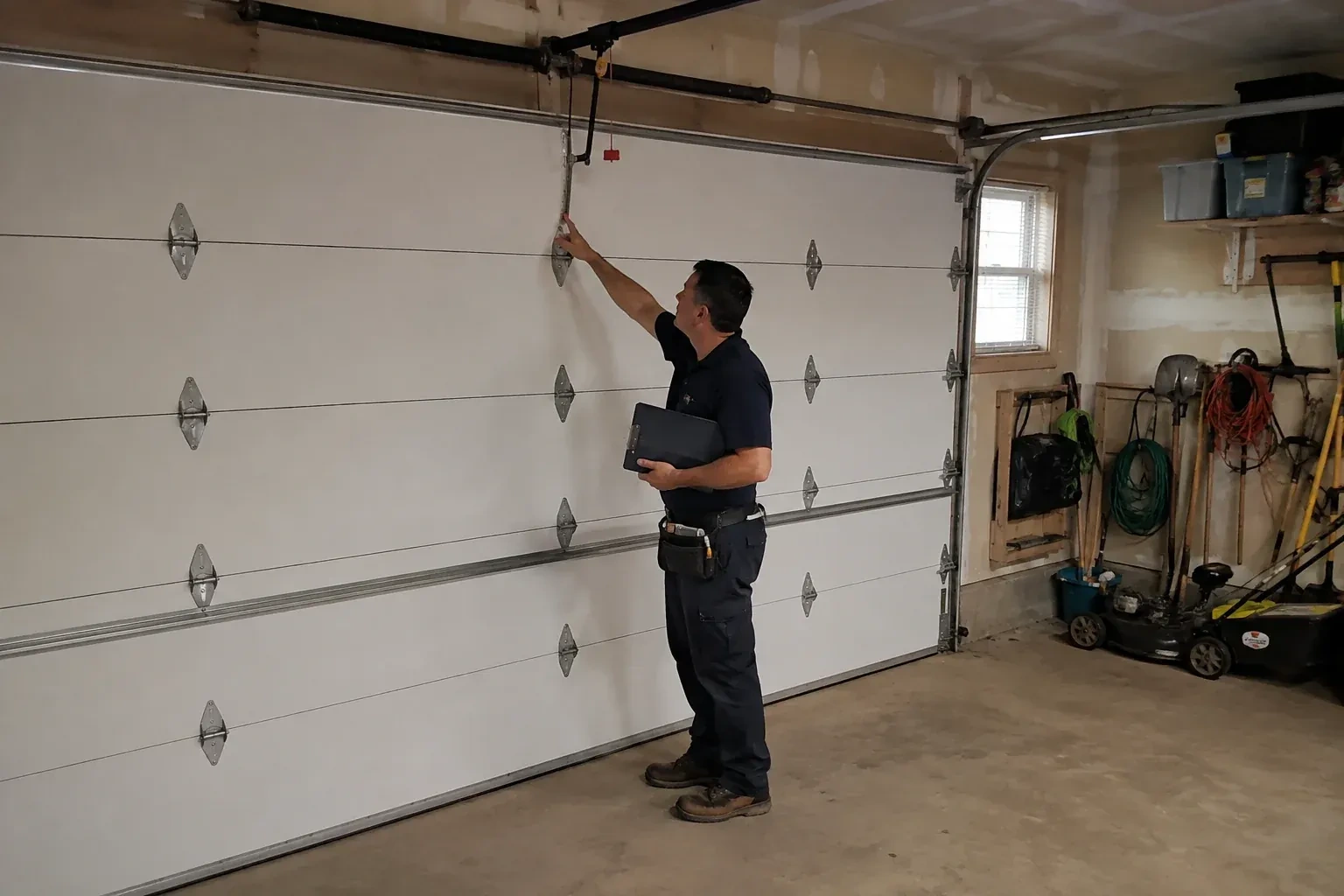
A person holding a clipboard examines the interior hardware of a closed garage door. — Garage Door Tune-Up, Toronto

Repairs · Toronto

Garage Door Tune-Up

Every morning the door announces itself to the whole street: a long metallic squeal as it climbs, a rattle at the top, and a groan on the way back down. It still opens and closes, but it never used to sound like this.

In plain words

Garage doors here live through a wide swing of seasons, and a tune-up before winter pays for itself in smooth mornings. Cold thickens tired lubricant and stiffens steel, so a door that ran fine in September can groan in January. Rubber seals go hard, meltwater freezes the bottom seal to the slab, and road salt works on the lower hardware. The fall visit replaces old lubricant with a low-temperature product, treats the seals with silicone and checks the threshold, since a door frozen to the slab should be freed and dried rather than forced by the opener.

Sound familiar?Toronto

The call
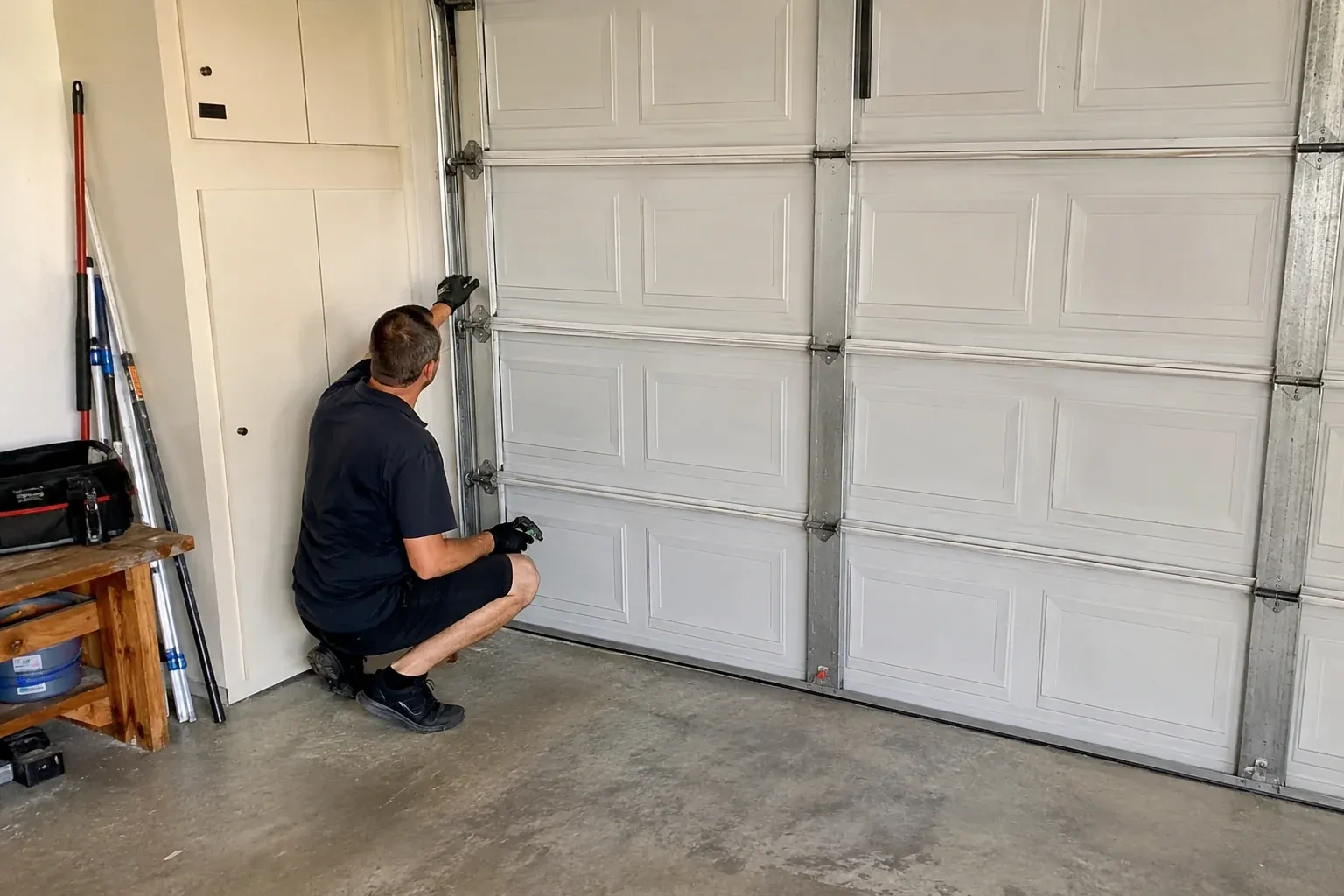
On windy nights the door rattles in its frame, there is a line of daylight along one side, and the bottom seal has gone hard and flat. Leaves and fine snow drift in underneath and the garage never seems to hold its temperature.
NextHow the visit goes

Garage Door Tune-Up · Toronto

How the visit goes

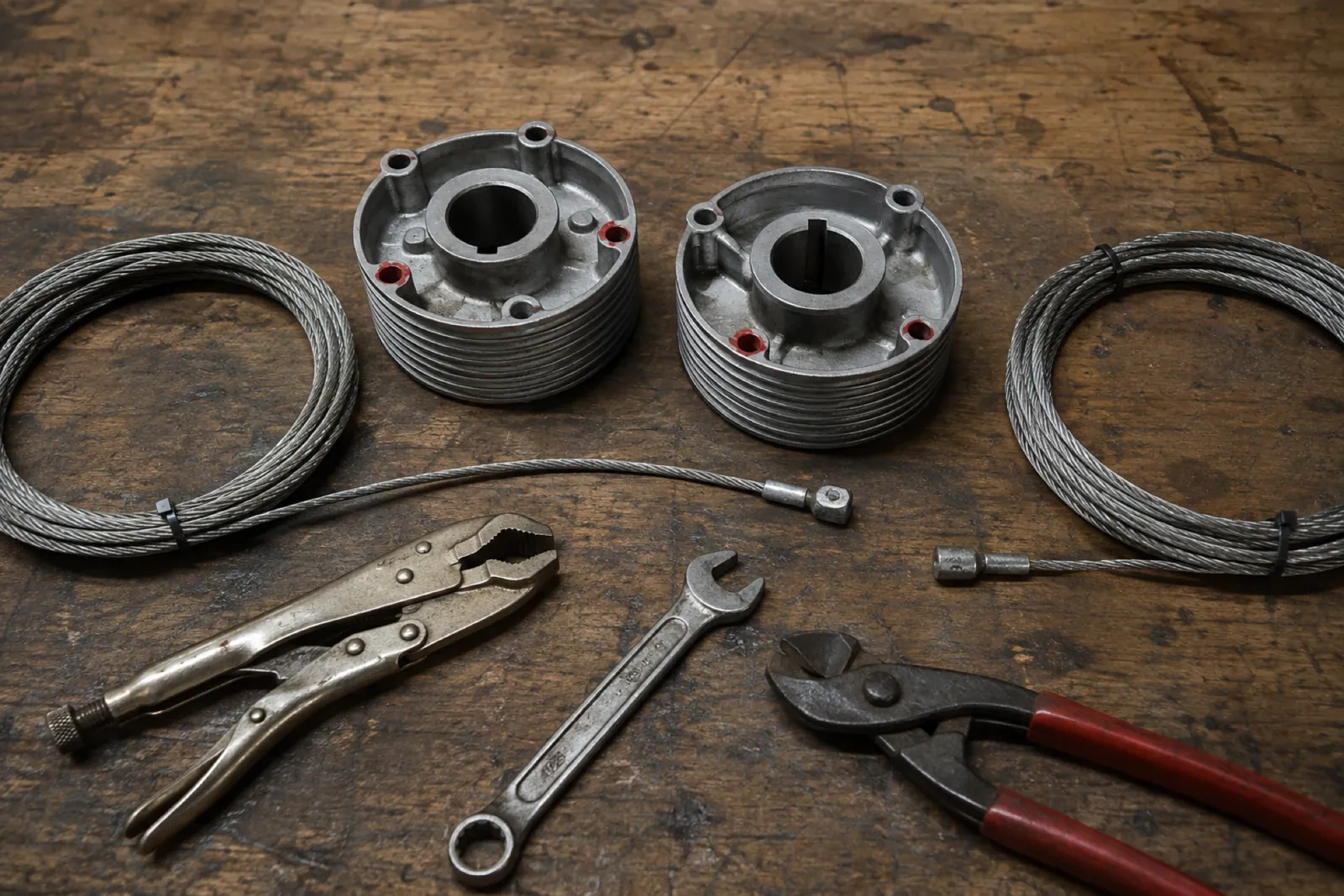
Pair of cast metal cable drums, two coiled steel cables, locking pliers, a combination wrench and red-handled cutters on a wooden bench.
  1. Scene 1

    Your history of the door

    The technician also asks you a few plain questions, because you have been living with this door every day. When did the noise start? Does the door behave differently in cold weather? Has anything struck it, or has a storm bent anything? Does it ever reverse on its own? Has anyone worked on it before, and is there paperwork or a model label? Are the remotes and wall button doing what you expect? None of this replaces the physical inspection, but it points attention to the right place and often explains a finding, such as a track that was knocked by a bumper months ago. Your answers go into the written record too.

  2. Scene 2

    Lubricating the right points and skipping the wrong ones

    Each moving joint gets a small amount of silicone- or lithium-based lubricant: hinge pins, steel roller bearings, spring coils, the bearing plates at the torsion shaft ends, the centre bearing and the lock. The technician works the door a few centimetres by hand so the lubricant spreads into the bearings. What is not lubricated matters just as much: track surfaces are wiped clean and left dry so rollers roll rather than slide on a film that gathers grit. Nylon tires are left untreated, though an exposed nylon-roller bearing gets lubricant where its maker calls for it. The chain or belt is handled only as the opener maker directs, and excess is wiped off so it never drips onto a vehicle.

  3. Scene 3

    A written record and a priority list

    The visit ends with a plain document rather than a verbal summary. It lists what was tightened, lubricated and adjusted; how the balance and both reversal tests came out; the make and model of the door and opener; and the condition of the main parts, sorted into three groups: healthy, worth watching, and ready for its own repair with a quote attached. This record is what makes the next tune-up a comparison rather than a fresh start. It also gives you exact words when a new sound turns up, so you can say which hinge or which roller instead of describing a noise, and it is a useful page in the home file when the house is sold.

In the van

  • Replacement steel or nylon rollers
  • Replacement hinges
  • 2x4 test block and tape measure
  • Locking pliers or C-clamps
  • Hinge screws and track bolts

What shapes the quoteFairhaven Garage Door Services

Photo-eye and wiring work
Cleaning and realigning sensors is routine. A bent bracket, a chafed wire or a sensor that has failed means a part or a rewire, which is named separately.
Upgrades you choose on the day
Quieter nylon rollers, a new bottom seal profile, a keypad or a battery backup for the opener are options some customers add while the technician is there, each priced as a separate line.
Bottom seal and weatherstrip
Treating existing seals is part of the tune-up; replacing a torn bottom seal or renewing hardened jamb weatherstrip is additional material and time, quoted by the length involved.

FeesSame any hour

Have it ready

Before you call · 0 / 3

(289) 804-2651

What to expect, in questions

What does a garage door tune-up actually include?

A full cycle observed before any work, a hands-on inspection of hinges, rollers, tracks, springs, cables, drums, brackets and the opener's attachments, tightening of the accessible fasteners, lubrication of the moving points with a garage door lubricant, a balance check with the door disconnected from the opener, adjustment of the opener's travel and force, cleaning and alignment of the photo-eyes, both reversal tests, a look at the seals, and a written record of the findings.

How long does a tune-up take?

For a single or double residential door with an opener, allow roughly an hour to two hours on site. The inspection and the two observed cycles take a fixed amount of time; the rest depends on how many fasteners have loosened, whether the sensors need realigning and whether you approve a small part replacement, such as a worn roller, during the same visit. Spring or cable work, if found necessary, is scheduled as its own job.

The sensor light is blinking. What does that mean?

On most openers a steady light on each photo-eye means the pair are aligned and seeing each other, and a blinking light means the beam is interrupted or the sensors are out of line. Common causes are a bracket nudged by a bin or a tire, dust or salt film on a lens, low sun at a certain hour, or a chafed wire. During a tune-up the lenses are cleaned, the brackets straightened, the pair realigned and the wiring checked back to the opener.

Torontoinformation

TorontoOntario

Town
Toronto
In business
26 years
Hours
Open 24/7
Nights, weekends and holidays, same fees
Visits
On-site assessment preferred. Request a visit or call.

2021 census: what it means at the door

Every square is one home in a hundred.

  • 58 in 100 homes · older homes
  • About 58% of homes in Toronto were built in 1980 or earlier, according to the 2021 Census.Original openers in older neighbourhoods often predate photo-eye sensors and rolling-code remotes. Bringing one up to date means a quieter motor, sensors that stop the door for a child or pet, and remotes that cannot be copied from the driveway, all installed in a single visit.
  • Single-detached houses make up about 23% of homes in Toronto (2021 Census).Condo and townhouse garages are frequently used for storage as much as parking, with the door opened many times a day, and the shared walls mean vibration travels. A well-balanced door, tight hardware and a quiet opener are the upgrades residents notice most.

Source: Statistics Canada, Census Profile

Open Toronto in Google Maps

On-site assessment

Request a visit.

Every morning the door announces itself to the whole street: a long metallic squeal as it climbs, a rattle at the top, and a groan on the way back down.

(289) 804-2651, open 24/7.