Sound familiar?Toronto
- The call
- One end of the bottom seal has slipped out of its channel and hangs down like a loose shoelace. Each time the door closes it folds under, each time it opens it flaps, and the gap beside it keeps growing.
After a spring rain there is a puddle inside the door that reaches the tires. The driveway slopes toward the garage, the slab has a low corner, and the flattened old seal is not making up the difference.
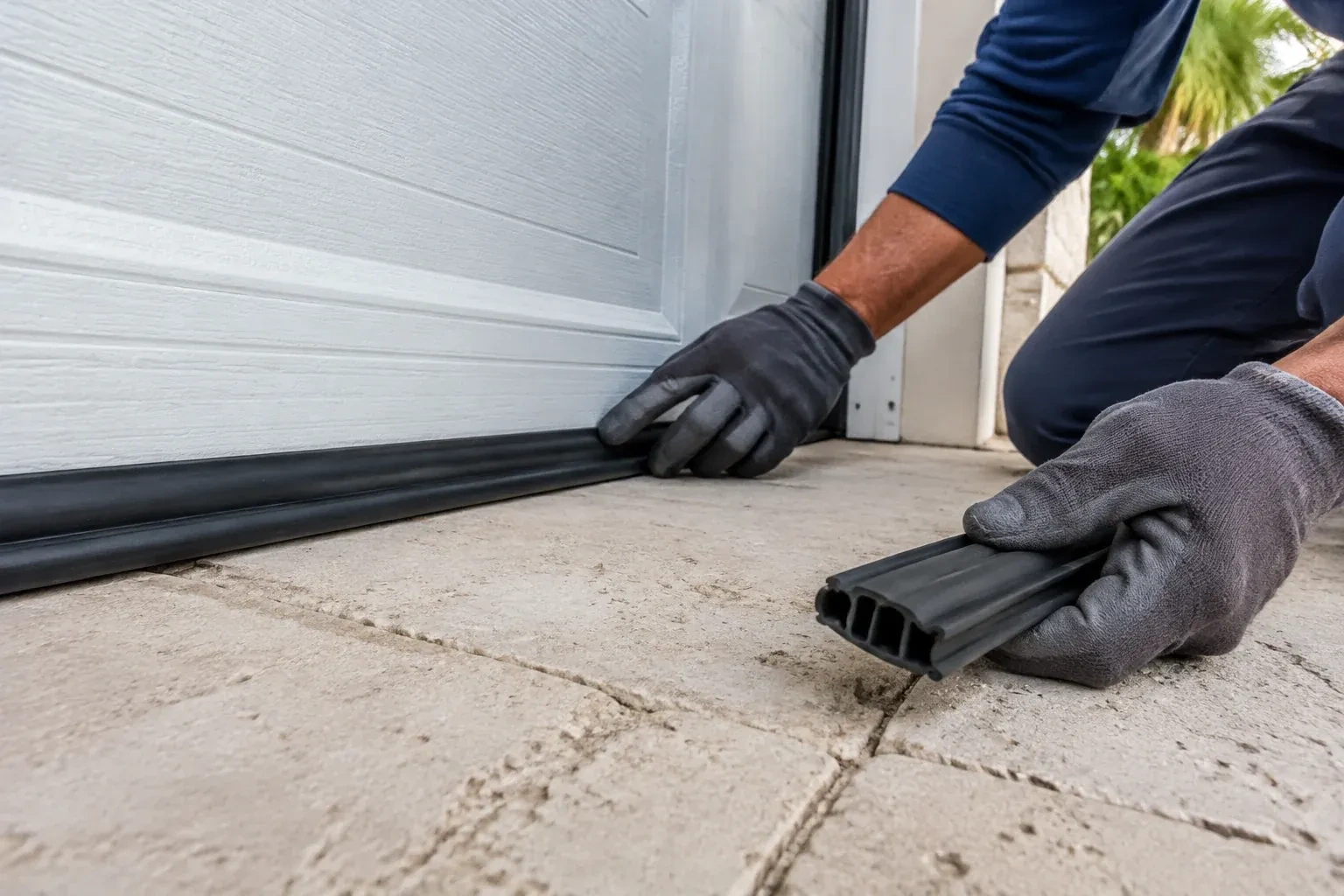
Bottom seals come in a handful of profiles, and the retainer on your door decides which one fits. A T-style seal has T-shaped edges that slide into a single or double channel; a bead seal has rounded edges for the bead channels found on many older steel doors; a bulb or U-style seal is a larger tube that compresses further and suits rough or dished floors. The technician measures the channel spacing and the door width, then picks the profile, height and material to match. A correctly matched seal slides home, stays put through thousands of cycles and closes evenly along its whole length.
Sound familiar?Toronto
Garage Door Bottom Seal Replacement · Toronto
Scene 1
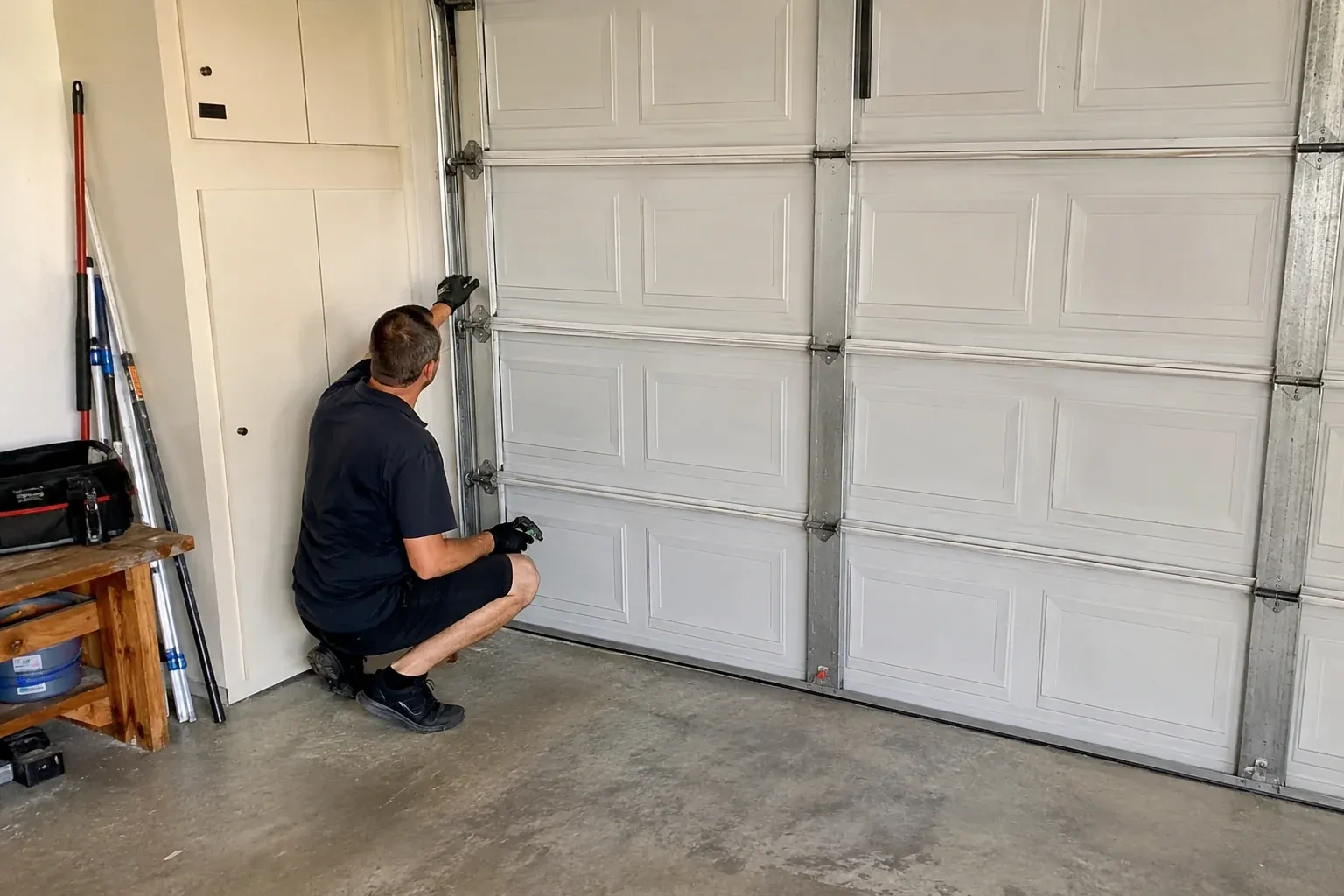
Before the old seal comes off, the technician watches the door close under power. Where the door stops, how firmly it lands, and whether the bottom section flexes as it settles all show how the down limit and force are set. A door that stops short leaves a gap regardless of the seal; one set to press hard flattens a new seal in a season and can bow the section. The current settings are noted so they can be reset once the new, taller strip is in place, and the photo eyes and reversing behaviour are checked at the same time so the finished door is tested against a known starting point.
Scene 2
The replacement is cut from a roll to the door width plus a small allowance at each end, using heavy shears or a knife, and the profile is checked against the retainer before any feeding begins. The technician confirms the T or bead edges match the channels and that the bulb height will fill the gap measured earlier without being squashed flat. Where the floor dips at one end, a slightly taller profile is chosen rather than relying on the opener to press harder. Cutting a little long means the ends can be trimmed to the door and finished cleanly once the seal is in.
Scene 3
The opener was reset to the new seal height, and it will hold that setting until something changes. If the door begins to reverse just before the floor, stops short and leaves a gap, or lands with a thump, the down limit or force has drifted or the seal has taken a set, and a small adjustment puts it right. The reversing test with a 38 mm (1.5 in) solid object, or a 2x4 laid flat under the door, is worth repeating monthly and after any adjustment, as the industry checklist for homeowners describes. A door that closes gently and reverses on an obstruction is one whose seal and opener are working together.
What shapes the quoteFairhaven Garage Door Services
FeesSame any hour
A threshold seal is a rubber or aluminum-backed strip glued to the garage floor along the line where the door closes. The door's bottom seal lands on it, and its raised outer edge turns water, wind-blown debris and small visitors back toward the driveway. It earns its place where the drive slopes toward the garage, the slab sits below the apron, or the floor edge is too uneven for the bottom seal alone to meet cleanly.
Many homeowners do, and a technician's value lies in the parts that go wrong: identifying the exact profile so the seal seats, freeing a strip that has fused into its channel, spotting a retainer or door-level problem behind the gap, and resetting the opener's limit and force so the door lands gently and still reverses on an obstruction. If you would rather have it measured, fitted and tested in one go, that is what the visit is for.
Not as a rule. The seal should fill the measured gap with a little compression to spare. A profile far taller than the gap gets squashed flat, wears at the fold, bows the bottom section and can make the opener reverse. Where the floor dips at one end, a taller bulb is the right call for that door; where the floor is flat, a standard height lasts longer. Measuring first is what settles it.
TorontoOntario
Garage Door Bottom Seal Replacement · Fairhaven, Humberlea, Kingsview Village, Martin Grove Gardens, Pine Point, Princess Anne Manor, Richview Gardens, St. Phillips, Westmount, Weston
Every square is one home in a hundred.
On-site assessment
After a spring rain there is a puddle inside the door that reaches the tires.
(289) 804-2651, open 24/7.
On-site assessment preferred · (289) 804-2651, open 24/7