Skip to content
FairhavenGarage Door ServicesOpen 24/7 (289) 804-2651
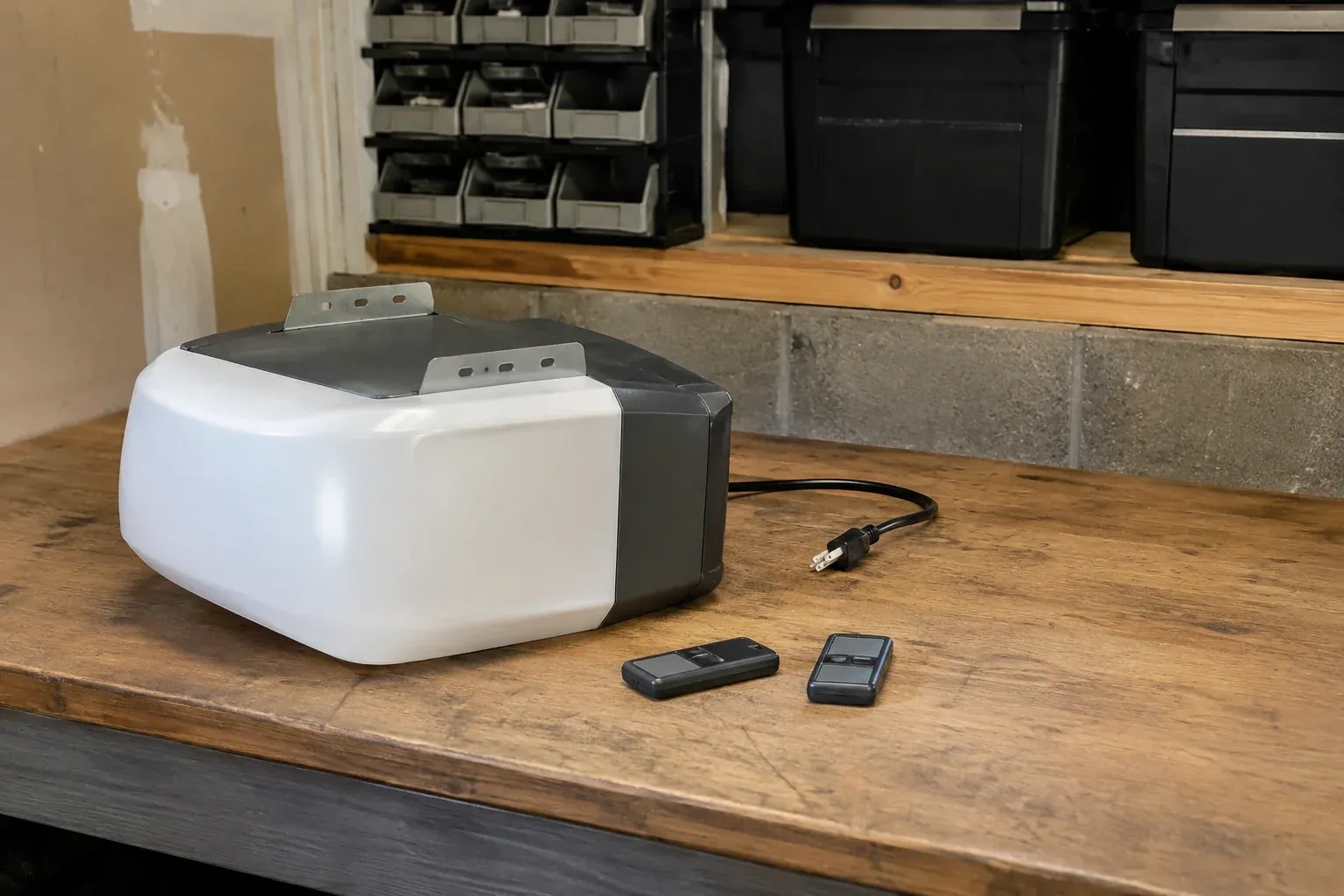
Detached opener housing and two remotes on a garage bench. — Garage Door Opener Replacement, Toronto

Openers · Toronto

Garage Door Opener Replacement

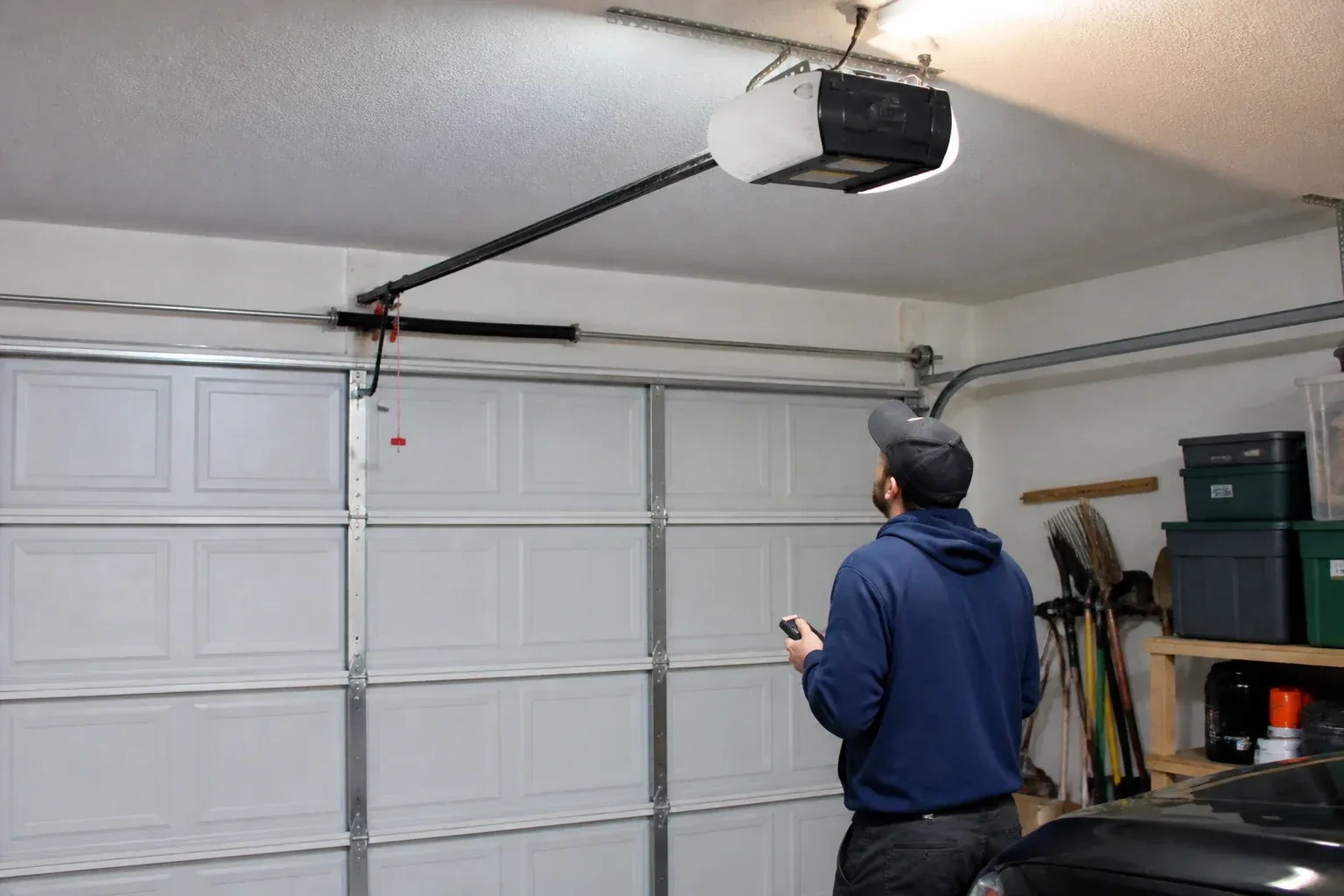
The opener in the ceiling is older than the car parked under it. It groans on the way up, the light fixture rattles, and there are no small sensors near the floor.

In plain words

Garage door opener replacement takes the tired operator out of your ceiling and installs a new one matched to the door below. It begins with the door: the technician disconnects the old opener and raises the door by hand to confirm the springs carry its weight, because an opener guides a balanced door rather than hauling a heavy one. The old head, rail and sensors come down, the new rail is hung from the framing, the door arm and any reinforcement are fitted, and fresh photo eyes and a wall console are wired in. Travel and force are set, the reversal is tested, and your remotes and keypad are programmed.

Sound familiar?Toronto

The call
Press the button and the motor hums, but the door stays exactly where it is. Under the housing there is a dusting of white plastic shavings, the sign of a stripped drive gear, and this is the second time it has happened.
NextHow the visit goes

Garage Door Opener Replacement · Toronto

How the visit goes

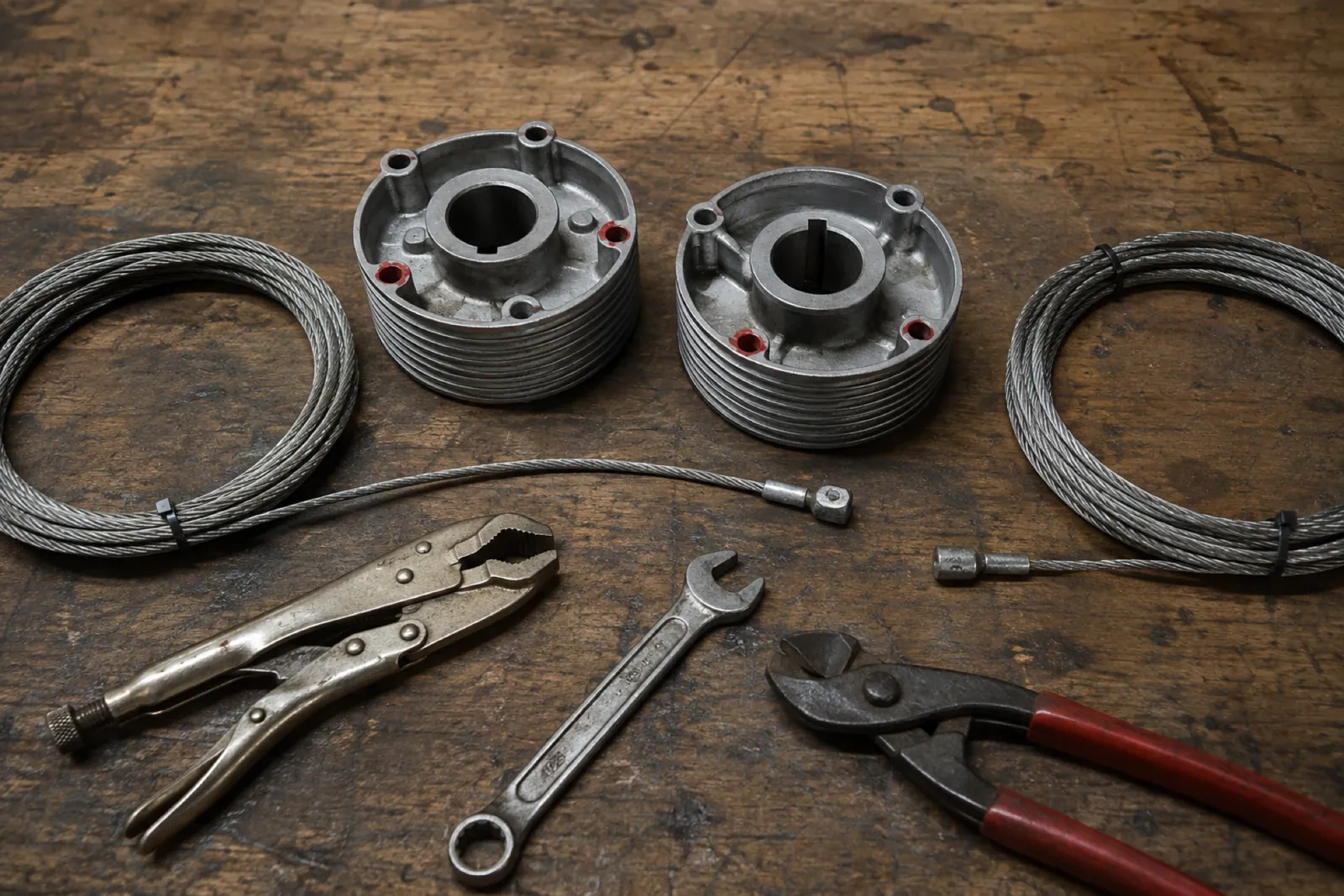
Pair of cast metal cable drums, two coiled steel cables, locking pliers, a combination wrench and red-handled cutters on a wooden bench.
  1. Scene 1

    Headroom, framing and where the rail will hang

    Looking up tells the technician how the new opener will fit. The gap between the top of the open door and the ceiling decides whether a standard rail has room or a low-headroom arrangement or a wall-mount operator is the better fit. The wall above the door is checked for solid framing to take the header bracket, and the ceiling for joists or trusses to carry the angle iron that hangs the head. Door height matters too: a 7 ft door takes a standard rail while an 8 ft door needs an extension. Storage racks, lights and ducts in the path of the rail are noted so nothing gets in the way on the day.

  2. Scene 2

    Setting travel and force

    With power on, the technician teaches the operator where the door starts and stops. Newer units run a learn cycle that measures the travel and the effort the door needs; others have open and close limit screws and force dials that are set by hand. The close limit is set so the bottom seal compresses gently against the floor without the door straining, and the open limit so the top section stops short of the header bracket. Force is set to the lightest level that moves the door reliably in the garage's normal temperature, which is what lets the operator notice an obstruction and reverse rather than push through it.

  3. Scene 3

    Keeping the door balanced under the new operator

    The new operator will run for many years if the door it moves stays balanced. Once a season, pull the release with the door closed, lift it by hand to about a metre and let go: it should stay there. If it drops or creeps upward, the springs have drifted and want a tune before the operator starts working harder to compensate. Watch too for a door that pauses or jerks at one point in its travel, which is usually a roller or a track bracket rather than the motor. A yearly service visit that checks balance, cables, rollers and the safety tests keeps both the door and the operator in step with each other.

In the van

  • Photo-eye sensors
  • Backup battery
  • Header bracket and lag screws
  • Chain or reinforced belt
  • Perforated angle iron hangers

What shapes the quoteFairhaven Garage Door Services

Lighting options
Built-in LED lamps come with most heads, while a motion-activated light, an extra remote light fixture or a brighter light kit for a workshop are add-ons listed on their own.
Detached or unheated garage
An operator rated for deep cold, a cold-rated lubricant and sometimes a heavier battery are chosen for a garage that sees winter temperatures, and those choices show in the equipment list.
Connectivity and camera
Wi-Fi control from a phone, a built-in camera and a range extender for a detached garage with a weak signal are each optional items that the quote names individually.

FeesSame any hour

Have it ready

Before you call · 0 / 3

(289) 804-2651

What to expect, in questions

Why does the technician test the door by hand before anything else?

Because the opener depends on the springs. With the old unit disconnected, a balanced door lifts with moderate effort and stays put at roughly waist height. A door that drops or drifts is telling the technician the springs need adjusting, and doing that first means the new operator is never asked to haul a heavy door, which would shorten its life and mask a problem that belongs to the door.

Is battery backup worth having?

For many households it is the feature they value most, especially where ice storms and winter outages are part of life. A backup battery inside or beside the head unit runs the door for a number of cycles when the power is off, so you can get the car out or put it away without heaving the door up by hand in the dark. The head unit chirps or lights an indicator when the battery needs renewing, which is every few years.

How do I test the safety reversal myself?

Two checks, once a month, each starting with the door fully open. For the first, set a scrap of 2x4 flat on the concrete where the door will land and press the close button; the moment it meets the wood it should climb back to the top. For the second, start the door closing and pass a broom or your arm across the low sensor beam; it should reverse just the same. Any hesitation means a small adjustment is due.

Torontoinformation

TorontoOntario

Town
Toronto
In business
26 years
Hours
Open 24/7
Nights, weekends and holidays, same fees
Visits
On-site assessment preferred. Request a visit or call.

2021 census: what it means at the door

Every square is one home in a hundred.

  • 58 in 100 homes · older homes
  • About 58% of homes in Toronto were built in 1980 or earlier, according to the 2021 Census.Original openers in older neighbourhoods often predate photo-eye sensors and rolling-code remotes. Bringing one up to date means a quieter motor, sensors that stop the door for a child or pet, and remotes that cannot be copied from the driveway, all installed in a single visit.
  • Single-detached houses make up about 23% of homes in Toronto (2021 Census).Condo and townhouse garages are frequently used for storage as much as parking, with the door opened many times a day, and the shared walls mean vibration travels. A well-balanced door, tight hardware and a quiet opener are the upgrades residents notice most.

Source: Statistics Canada, Census Profile

Open Toronto in Google Maps

On-site assessment

Request a visit.

The opener in the ceiling is older than the car parked under it.

(289) 804-2651, open 24/7.