Sound familiar?Toronto
- The call
- It is a February morning and the key goes only halfway into the garage handle. Yesterday's melt ran down the door face and into the keyway, and overnight it set like glass. The key flexes; the cylinder stays put.
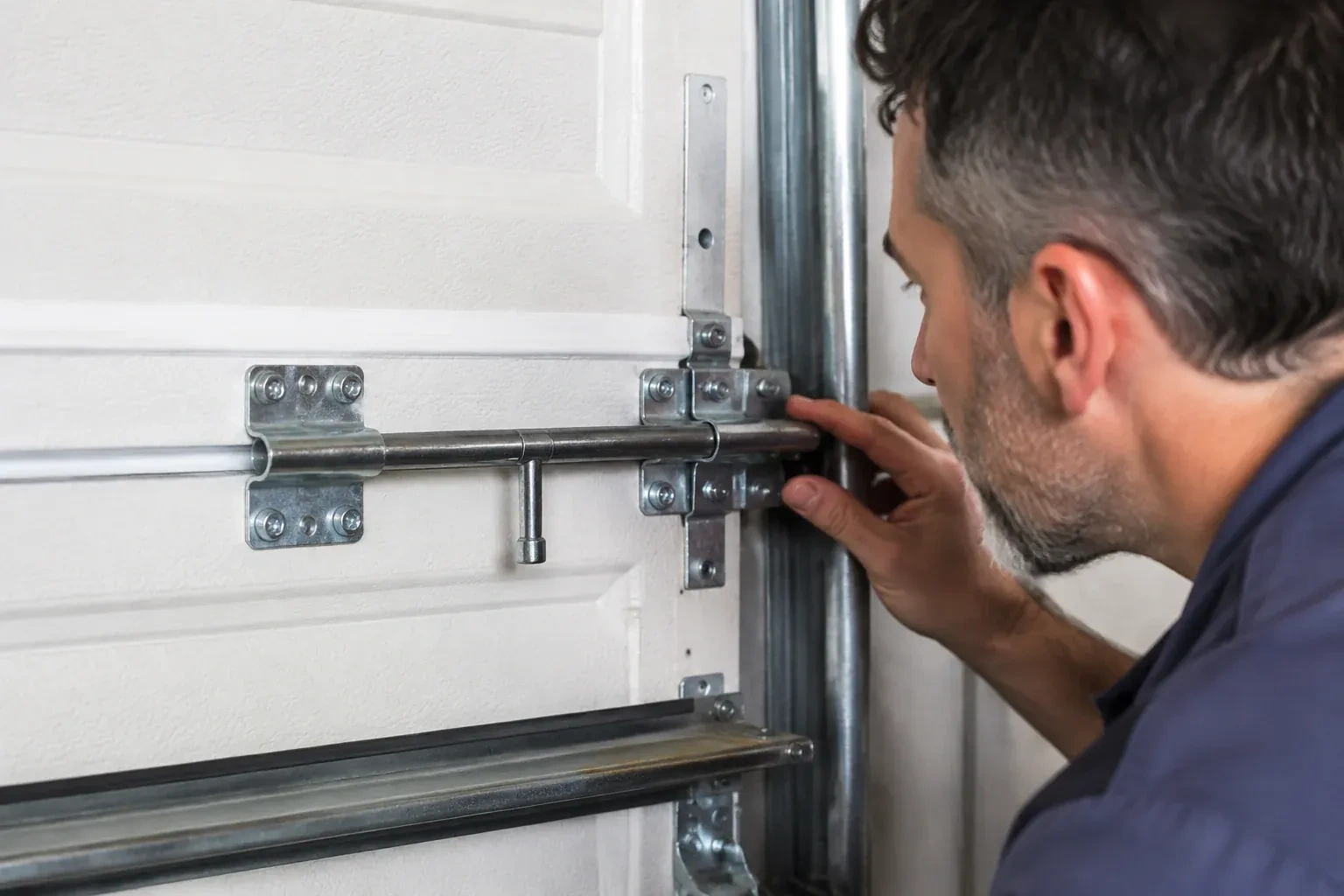
The T-shaped handle on the outside turns a full quarter, exactly as it has for twenty years, but nothing moves behind it. No clunk from the bars, no click at the tracks.
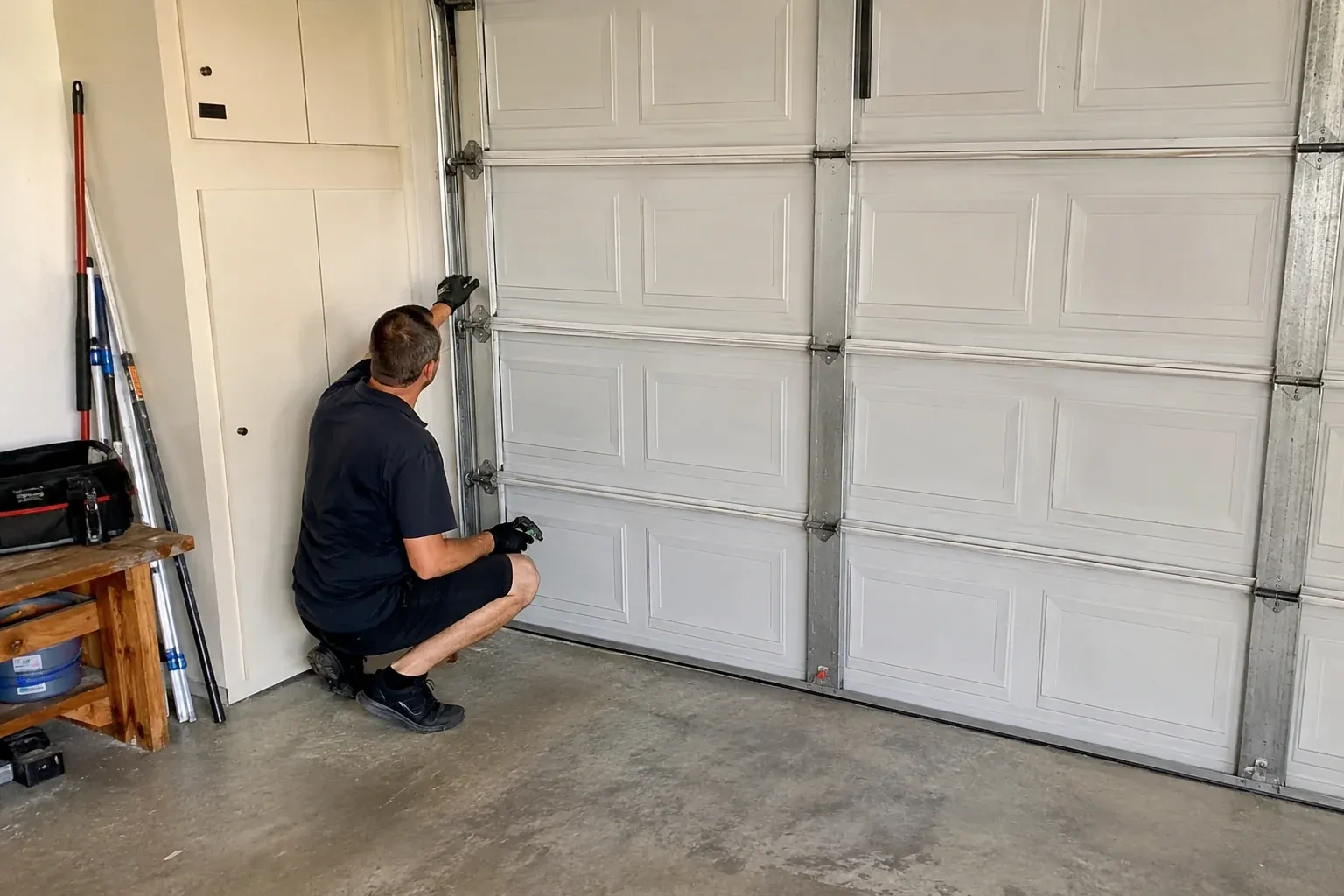
Many lock complaints turn out to be door complaints. The bar on a slide lock or a T-handle has to land in a small slot, and it only gets there if the door stops exactly where it stopped when the lock was fitted. A floor that has heaved, a track bracket that has loosened, a bottom seal that has flattened, or ice under the door all shift that landing point. The visit begins with the door: closed by hand, checked for level and for how it meets the floor and the tracks. With the door where it belongs, the lock often needs only a small adjustment to its guides.
Sound familiar?Toronto
Garage Door Manual Lock Repair · Toronto
Scene 1
The lock lives on the door section, and the section has to hold it. On a steel door the technician checks whether the screws through the thin skin have pulled and left oval holes, whether the handle base is cracked, and whether the section around the cutout has creased. On a wooden door the check is for softness and rot around the handle and along the stile where the bar guides are screwed, and for a handle that spins in an oversized hole. Insulated doors are measured for thickness so the replacement spindle and through-bolts reach. This tells the technician whether ordinary screws will hold again or whether carriage bolts and backing plates are needed for a lasting fix.
Scene 2
A slide bolt that is bent, seized or missing is replaced with a new lock of the same style, fixed to the door's edge stile so its bar lines up squarely with the slot in the track. Spring-loaded snap latches, which lock by themselves when the door closes, are set so they engage on closing and can be held open with their catch when the door is to be used with an opener. The fixing screws go into solid steel or wood, with through-bolts where the material is thin. The bolt is then thrown and released several times with the door down, and the technician confirms it clears the track fully so the door can rise without catching.
Scene 3
Where an opener shares the door, opener makers direct that the manual lock be removed or positively disabled rather than left in service on habit alone. The technician demonstrates the opener's own lock-out feature at the wall control and shows everyone who uses the garage how to tell at a glance whether the bars are in or out. Spring-loaded snap latches are left with their holding catch explained, since they lock on their own when the door closes. Most families settle into the routine after a few days, and the label is there for visitors, house-sitters and the one morning when someone is half asleep.
What shapes the quoteFairhaven Garage Door Services
FeesSame any hour
Something in the short chain between the handle and the bars. The square spindle may have twisted or sheared, the set screw holding the inside knob may have let it spin free, the cam inside the centre body may have worn round, or the return spring may have snapped. The inside cover comes off to see which, and the failed part or the whole mechanism is replaced to suit.
Yes. The decayed wood is cut back to sound material and a hardwood block or a steel backing plate is let in behind the handle and along the stile where the bar guides sit. The handle, mechanism and guides are then fixed to that new material with through-bolts rather than screws into soft grain, so the lock turns without rocking and the bars hold their line.
Opener makers ask for it to be disabled or removed, and the door industry's guidance agrees. Disabled can mean the bars are fixed back or taken out while the handle stays for appearance, or a snap latch is held open on its catch. Keeping a lock live for outages calls for a manufacturer-approved interlock, not a label alone, since a reminder and routine are not treated as a substitute for removing or disabling the bars.
TorontoOntario
Garage Door Manual Lock Repair · Fairhaven, Humberlea, Kingsview Village, Martin Grove Gardens, Pine Point, Princess Anne Manor, Richview Gardens, St. Phillips, Westmount, Weston
Every square is one home in a hundred.
On-site assessment
The T-shaped handle on the outside turns a full quarter, exactly as it has for twenty years, but nothing moves behind it.
(289) 804-2651, open 24/7.
On-site assessment preferred · (289) 804-2651, open 24/7